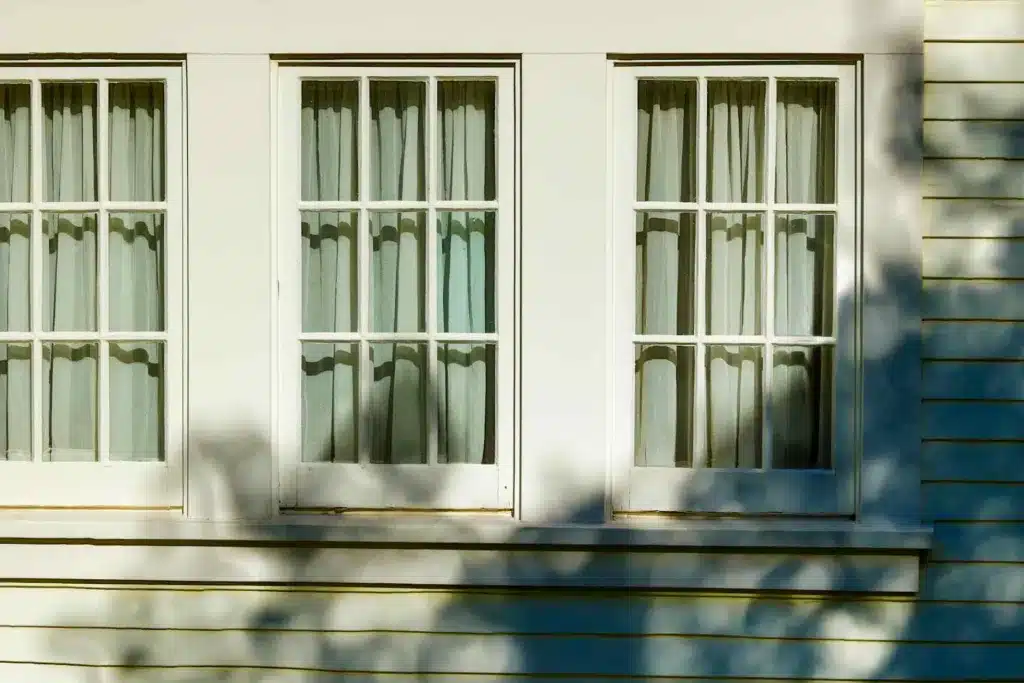

Property owners shopping for the best window brands for the Florida Keys have to choose from a short list: PGT, CGI, CWS, ES Windows, WinDoor, and Andersen Stormwatch because Monroe County’s design wind pressures, salt air, and code requirements oust most of the options that pass muster elsewhere in Florida.
Living in Islamorada, Key Largo, Key West, or Marathon, we face a different set of conditions than Floridians on the mainland, and the window brand decision needs to reflect that understanding.
Key Takeaways
- The Florida Keys are in one of the harshest wind and salt-air environments in the country, with design wind speeds reaching 170-190 mph across Monroe County.
- Only a handful of brands: PGT, CGI, CWS, ES Windows, WinDoor, and Andersen’s Stormwatch line consistently deliver in Keys installations when paired with the right frame material.
- Brand reputation matters less than product certification; Florida Product Approval and, in many cases, Miami-Dade Notice of Acceptance documentation, is what protects your home.
- Aluminum frames outperform vinyl for most Keys homes because of design pressures, salt-air corrosion, and the absence of a last-minute boarding-up option.
- The My Safe Florida Home program offers matching grants up to $10,000 for qualifying primary residences.
Why the Florida Keys Are a Special Case
Every property in Monroe County has water on all sides: the Atlantic to the east, the Gulf and Florida Bay to the west. That’s 360 degrees of salt spray, year-round humidity, and direct hurricane exposure without the buffering effect of mainland landmass.
Then there’s the evacuation reality. US-1 is the only road out, and a full evacuation can take six to eight hours to clear. Your windows have to stand up on their own; there’s no boarding up at the last minute.
This combination is why building officials, insurers, and contractors treat Florida Keys windows as a life-safety system rather than a finish upgrade. It also narrows the list of brands that genuinely belong on a Keys home.
What Florida Building Code Requires in the Keys
There’s some confusion about whether the Florida Keys fall under the High-Velocity Hurricane Zone (HVHZ). The formal HVHZ designation in the Florida Building Code covers Miami-Dade and Broward counties. Monroe County sits in the Wind-Borne Debris Region, but because design wind speeds across the Keys go as high as 170 to 190 mph, the practical requirements are effectively HVHZ-equivalent.
For a Keys homeowner, it means that:
- Any glazed opening in new construction must be impact-resistant or protected by approved shutters.
- Replacement windows must meet the same standard when more than 25% of your home’s glazed area is replaced within a rolling 12-month period.
- Products require, at minimum, a current Florida Product Approval, and many Keys building departments and homeowner associations (HOAs) also ask for Miami-Dade Notice of Acceptance (NOA) documentation.
You can verify any product’s approval status through the Florida Building Commission’s product approval database and look up your exact design wind speed via the University of Florida GeoPlan Center wind speed maps.
Brands that Perform Well in the Keys
No single brand is right for every home, but the brands below show up repeatedly in Keys installations because they’ve been engineered for, tested in, and proven on coastal Florida properties.
PGT: WinGuard Series
The most installed impact window brand in Florida, PGT has manufacturing operations based in Venice and decades of product development focused specifically on Florida’s wind and code environment. The WinGuard 5500 and Vinyl WinGuard lines are widely used across Islamorada and Marathon for their balance of storm performance, energy efficiency, and price. PGT offers enough configurations to fit most Keys home styles without going custom.
What stands out is that PGT maintains current Florida Product Approvals and Miami-Dade Notice of Acceptance documents for the majority of its impact lines, and Monroe County plan reviewers and inspectors see PGT submittals so frequently that approval and inspection sign-offs tend to move faster than with less-common brands. PGT also offers aluminum-frame options that handle Keys salt air well, and a lifetime limited warranty on most series.
PGT is usually the strongest fit for midrange to upper-midrange budgets and for owners who want a product that their installer and inspector already know inside out.
CGI: Sentinel and Targa Series
A Miami-Dade-headquartered manufacturer, CGI specializes in high-end aluminum products. The Targa series is built for HVHZ-level design pressures, which makes it a strong fit for oceanfront Key West and Lower Keys properties facing direct exposure.
The brand’s signature features are heavy aluminum frames engineered for high design pressures, clean narrow sightlines preferred in modern Keys architecture, and a long track record in HVHZ jurisdictions.
CGI works well for owners prioritizing maximum structural rating and modern aesthetics over price.
Custom Window Systems (CWS): StormStrong
A Florida manufacturer, CWS has built a reputation for engineering products specifically for our state’s wind and humidity profile. The StormStrong line is a popular midmarket option in Key Largo and Marathon.
The brand’s advantages include Florida manufacturing, which simplifies warranty service, competitive pricing without sacrificing certifications, and solid energy performance with Low-E packages.
CWS is the right call for homeowners who want a domestic Florida manufacturer at a reasonable price point.
ES Windows: Prestige, Elite, Multimax
A major impact-window manufacturer, ES has gained ground in Florida luxury construction. The Prestige and Elite series are common picks in higher-end Islamorada and Key West renovations.
Strengths include a wide range of finishes and oversized configurations for view-driven floor plans, HVHZ-compliant products with proven Miami-Dade NOAs, and a commercial pedigree that translates to robust hardware.
ES is well-suited to custom homes, oversized openings, and design-led renovations.
WinDoor
At the luxury end of the Keys market, WinDoor’s built around large openings, sliders, and design-forward configurations common in waterfront builds.
WinDoor’s distinguishing characteristics are premium aluminum construction, large-format doors and windows that pair cleanly with architectural design, and noise-reducing laminated glass options.
WinDoor makes the most sense for new construction and major renovations where appearance carries equal weight to storm protection.
Andersen: A-Series Coastal with Stormwatch
A major national brand, Andersen consistently lands on Keys installation lists. Stormwatch is Andersen’s branding for the impact-rated configuration available across several of its product series including the 400 Series and A-Series. It’s a glass package and frame reinforcement, not a standalone product line.
A-Series is Andersen’s premium product line built on a Fibrex composite, a fiberglass/wood-fiber blend, with an aluminum exterior cladding. The A-Series Coastal configuration is the version specified for coastal exposure and pairs the A-Series frame with Stormwatch impact glazing.
Andersen brings a strong nationwide warranty and service network, A-Series fiberglass options that handle salt better than standard vinyl, and recognized resale appeal. If you want the premium coastal-rated build, ask specifically for the A-Series Coastal configuration with Stormwatch glazing.
Andersen is a good choice for owners who want a household-name brand and are willing to verify the specific model is approved for their wind zone.
Frame Material: Why Aluminum Usually Wins in the Keys
Vinyl, fiberglass, aluminum, and wood-clad options all get promoted across Florida. In the Keys specifically, the trade-offs look different because three local factors push the calculation away from what works on the mainland.
- Design pressure (DP)—Keys homes face wind loads that smaller vinyl frames aren’t engineered to handle on larger openings. This means that a vinyl unit that’s code-compliant on the mainland may not even be available in the dimensions a Keys home needs.
- Salt air—Constant marine humidity corrodes hardware, attacks lower-grade finishes, and degrades sealants faster than inland environments, favoring aluminum frames with marine-grade finishes and stainless or coated hardware.
- Heat and UV—The Keys are at a latitude where the sun’s intense year-round; vinyl frames expand and contract more than aluminum or fiberglass, which can stress seals over time and shorten the practical service life of larger units.
Weighed against those factors, window frame materials perform as follows:
- Aluminum—Handles the highest DPs, resists corrosion when properly finished, and accepts large window dimensions without sagging. It’s the default for oceanfront homes in Key West and Marathon.
- Vinyl—Can work on bayside properties with less direct ocean exposure and at lower wind zones, but expansion under heat and a lower structural rating limit its use on larger openings.
- Fiberglass—Between the two: strong, dimensionally stable, and reasonably corrosion-resistant. Andersen’s A-Series leans heavily on this.
- Wood-clad—Rare in the Keys because of humidity and termite pressure.
If a salesperson pushes vinyl for an oceanfront Keys home, be sure to ask for the DP rating and the manufacturer’s coastal warranty terms in writing.
Understanding DP and PG Ratings
Two numbers determine whether a window can actually do its job in the Keys, and both appear on the manufacturer’s product approval documentation rather than on marketing brochures.
- Design Pressure (DP)—Measures how much wind force the unit can take before it fails structurally, expressed in pounds per square foot. A DP-50 unit resists about 75 mph wind load, DP-60 handles 90+ mph, and HVHZ-rated products typically run DP-70 and higher.
For most Keys addresses, DP-60’s the floor and DP-70+ is more appropriate for oceanfront and Lower Keys exposures. DP only measures structural wind resistance though it doesn’t tell you how the unit handles wind-driven rain or air infiltration. - Performance Grade (PG)—Composite rating that tests air infiltration, water penetration, structural integrity, and forced entry resistance together. This makes it a more complete picture of how the window will actually perform on a Keys home during a storm.
A window can carry a respectable DP rating and still leak water around the frame at moderate wind speeds; PG is the rating that catches that failure mode.
When you’re comparing two products that both claim “hurricane rated,” ask for the PG number alongside the DP and also ask to see the manufacturer’s Florida Product Approval document or Miami-Dade NOA. Those documents list the exact tested configurations including the maximum allowed dimensions for each rating, which matters because a unit rated DP-70 in a 3-foot by 5-foot configuration may only achieve DP-50 when scaled up to a 6-foot by 8-foot opening.
ENERGY STAR Certification and Why It Matters in the Keys
A joint certification program from the U.S. Environmental Protection Agency (EPA) and the U.S. Department of Energy (DOE), ENERGY STAR sets minimum energy-efficiency benchmarks for windows, doors, and skylights. A specific product earns the ENERGY STAR label when it meets the performance thresholds for its climate zone.
For the Florida Keys, the relevant climate zone is Southern, which has the tightest Solar Heat Gain Coefficient (SHGC) requirement in the country. SHGC measures how much of the sun’s heat passes through the window. In a place where cooling runs most of the year, a lower SHGC translates to lower electric bills.
The National Fenestration Rating Council (NFRC) is the independent nonprofit that actually performs energy-performance testing and produces the standardized rating label you see physically attached to every new window.
Two numbers to look for on the white-and-blue NFRC sticker are:
- U-factor—Measures how well the window insulates. Lower’s better; for impact windows in the Keys, expect values in the 0.30–0.50 range.
- SHGC—Indicates how much solar heat the window admits. Lower’s better in the Keys; the current Southern-zone ENERGY STAR threshold is 0.23 or lower.
Most of the brands recommended above offer ENERGY STAR-certified configurations, but the certification’s product-specific rather than brand-wide. A PGT WinGuard unit with Low-E 366 glass may carry the label while the same line with a standard glass package may not.
Always ask for the NFRC label on the specific unit you’re being quoted, not the brand’s marketing materials. You can verify any product’s current ENERGY STAR certification through the ENERGY STAR Certified Windows, Doors, and Skylights database.
Glass Itself: Laminated, Not Tempered
Impact glass is laminated: two panes of glass bonded to a polyvinyl butyral (PVB) or SentryGlas interlayer. When struck by debris, the glass can crack, but the interlayer holds it in the frame. That’s what prevents the pressure-equalization event that destroys roofs.
Not all laminated glass performs the same way under Keys conditions. That’s why you need to ask about the following items before you sign off on the glass package.
- Interlayer—PVB’s the industry standard and performs well in most impact applications. SentryGlas, however, is a stiffer ionoplast interlayer that holds the glass more rigidly after fracture and performs better in high-pressure events, which can matter on oceanfront installations or large openings.
- Total laminated glass thickness—Standard impact units use 9/16-inch or 7/16-inch laminated configurations, and thicker assemblies usually handle larger missile impacts and higher pressure cycles. Ask for the specific glass make-up in writing.
- Missile rating—Large Missile Impact (LMI) is the standard for ground-floor installations in coastal Florida and is what you should expect on a Keys home. LMI testing fires a 9-pound 2×4 lumber projectile at 50 feet per second to simulate hurricane debris. Small Missile Impact (SMI) is acceptable in some elevated applications, but LMI is the safer specification for the Keys.
To get technical details on impact glazing standards and hurricane-resistant construction, see the Insurance Institute for Business & Home Safety (IBHS) that publishes peer-reviewed research and the National Hurricane Center which maintains the wind-speed data behind the code maps.
What to Ask Before You Pick a Brand
The brand decision shouldn’t happen in isolation. Before you commit, work through the following questions with your installer and the manufacturer’s local representative; the answers will tell you more about whether the brand’s the right fit for your home than any marketing material will.
- Certification—Start with this and ask whether the specific model, not the brand in general, carries a current Florida Product Approval, and where applicable a Miami-Dade NOA. Brands carry dozens of product lines, but only some are approved for HVHZ-equivalent conditions.
- Verify the rating against your address—Ask what the DP rating is and confirm that it meets or exceeds the design wind speed mapped for your specific property. A unit rated for 140 mph design pressure isn’t appropriate for an oceanfront Key West lot rated at 180 mph.
- Corrosion exposure—Ask whether the frame finish is rated for marine exposure and whether the hardware (rollers, locks, hinges, screws) is stainless steel or coated for salt air. Standard finishes that work fine on the mainland will pit and corrode within a few years in Marathon.
- Coastal warranty terms—Read them carefully. Ask what the warranty term’s for products installed in coastal salt-air conditions because many manufacturers reduce warranty coverage in coastal zones or exclude finish degradation entirely.
- Parts pipeline—Confirm it and ask how quickly replacement parts are available in the Keys if a hardware component fails. A brand with no local rep and a 12-week parts lead time could leave you waiting through hurricane season.
- Local installation history—Ask your installer how many installations of this specific brand they’ve done in Monroe County over the last two years. Brand performance and installer familiarity go together; a great brand installed by a crew that’s learning it on your home’s a worse outcome than a solid brand installed by a crew that’s done it a hundred times.
Insurance Discounts and the My Safe Florida Home Program
Properly installed and documented impact-rated windows usually qualify for significant wind-mitigation insurance credits. Discounts vary by carrier, but the Florida Office of Insurance Regulation requires insurers to offer wind-mitigation credits when a homeowner submits a current OIR-B1-1802 inspection form.
The My Safe Florida Home program is worth a close look for Keys homeowners. It offers:
- Free wind mitigation inspection through state-licensed inspectors
- Matching grants up to $10,000 (our state contributes $2 for every $1 the homeowner spends) for qualifying improvements including impact-rated windows
- Lower-income applicants may qualify without the match requirement
Eligibility requires a filed homestead exemption, meaning that the home’s your primary residence, along with an insured-value cap and other criteria. Verify current requirements directly at My Safe Florida Home since funding cycles and rules may change.
Pricing Expectations for Windows in the Florida Keys
Window costs in the Keys go higher than the Florida statewide average because of barge logistics, marine-grade hardware, larger openings on view-driven homes, and the need for HVHZ-equivalent product.
Ballpark ranges for a fully installed impact window in the Keys consist of:
- Smaller, single-hung or fixed units: $1,000-1,800 per opening
- Midsized sliders and casements: $1,800-3,500 per opening
- Large impact sliders and oversized custom units: $4,000-8,000+ per opening.
A typical whole-home window replacement on a Keys single-family home costs between $25,000 and $80,000, with luxury and oceanfront projects running well above that.
Reference Sources:
- ENERGY STAR: Residential Windows, Doors, & Skylights
- Florida Department of Business and Professional Regulation (DBPR): Verify a Licensee
- Florida State University (FSU): Florida Climate Center (FCC)
- Insurance Institute for Business & Home Safety (IBHS): Why IBHS?
- Monroe County Florida: Contractor Information, Forms, & Applications
- My Safe Florida Home
- University of Florida: GeoPlan Center
Frequently Asked Questions(FAQ) about the Best Window Brands for the Florida Keys
Below are the questions Keys homeowners ask most often once they start narrowing down window brands.
Which window brand is most popular in the Florida Keys?
PGT has the largest market share in Florida and is widely installed across the Keys. That said, popularity isn’t the same as fit; CGI, CWS, ES, WinDoor, and Andersen’s Stormwatch line are all worth considering depending on your home’s exposure, budget, and design.
Are the Florida Keys part of the HVHZ?
The formal HVHZ designation in the Florida Building Code covers Miami-Dade and Broward counties. Monroe County’s in the Wind-Borne Debris Region (WBDR), with design wind speeds of 170-190 mph in much of the Keys that produce HVHZ-equivalent requirements in practice. Verify the current requirement with the Monroe County Building Department for your address.
Can I use vinyl windows in Key West or Marathon?
Vinyl can be code-compliant on lower-exposure bayside properties at lower design pressures. On oceanfront or higher-wind-zone parts of the Keys, aluminum is usually the practical choice because of design pressure ratings and salt-air longevity.
How long do impact windows last in the Keys?
A properly installed impact window with marine-grade hardware should last 20-30 years in the Keys though hardware components like rollers and locks may need service before then. Salt-air corrosion accelerates wear on any exposed metal so finish quality matters.
Do impact windows cut energy bills?
They typically help. Most carry Low-E coatings and improved seals, which reduce solar heat gain and air infiltration. Cooling-cost reductions of 15-25% are within range for many Keys homes.
Will my insurance carrier give me a discount?
Most carriers in Florida offer wind-mitigation credits for properly documented impact-rated windows, especially when the whole envelope (windows, doors, garage door) is upgraded. You’ll need a wind mitigation inspection submitted to your carrier.
Are national brands like Andersen and Pella good choices in the Keys?
They can be, but you need to ask for the coastal-rated configuration specifically. Andersen Stormwatch, especially, is the line to ask about. Many national brands offer impact glazing in some product lines, but not others. Verify Florida Product Approval before signing.
Get the Right Window on Your Keys Home the First Time
Choosing a window brand for your Florida Keys home comes down to matching the product to your exposure, your frame material, and an installer who knows the Monroe County process. PGT, CGI, CWS, ES Windows, WinDoor, and Andersen Stormwatch have all earned their places on a Keys shortlist, but the right answer for your home depends on which side of the island you’re on, what your design pressure requirement is, and the budget you’re working with.
If you’re a homeowner in Islamorada, Key Largo, Marathon, or Key West, reach out to us for a straightforward discussion of which brand and configuration fits your home along with help with permits, NOA verification, and the My Safe Florida Home grant. Having installed windows across the Keys since 1949, Lindholm Exteriors knows what works on the islands and what doesn’t. That experience has earned us an A+ rating from the Better Business Bureau (BBB) and the trust of generations of Keys homeowners.
Request a free estimate when you’re ready to look at windows for your home, and let’s discuss which upgrades fit your home, your budget, and your timeline.