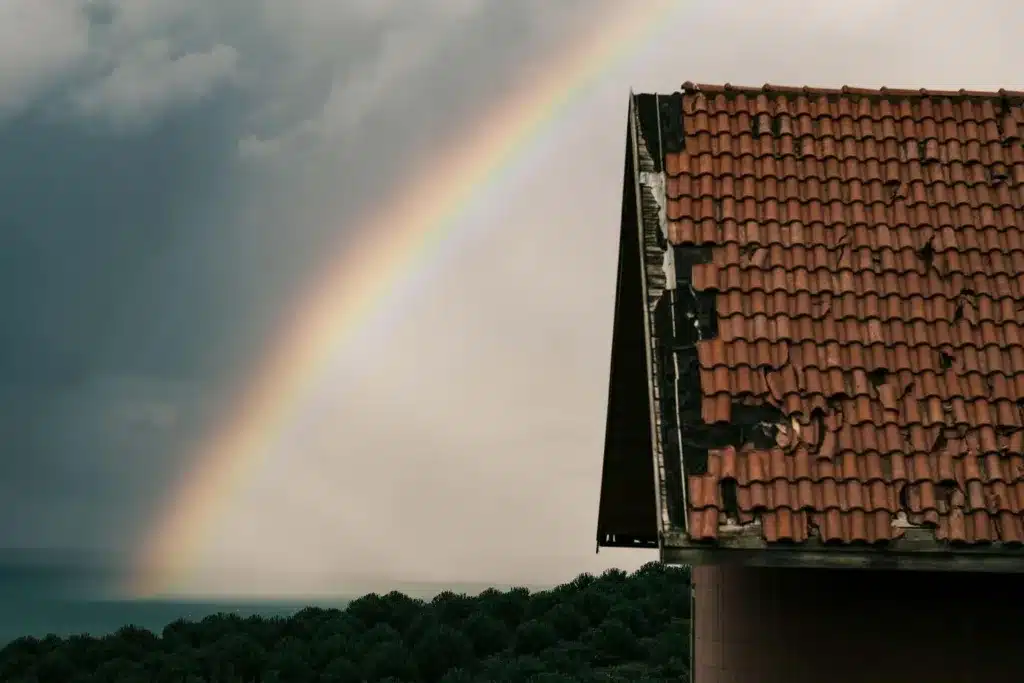

Roof leak detection in the Florida Keys is the single most valuable maintenance habit a homeowner in Islamorada, Key Largo, Key West, or Marathon can build because the same salt air, hurricane gusts, and UV intensity that make life down here worth living also break roofs faster than almost any other zip code in America. Catching the problem early is the difference between a $300 repair and a $30,000 ceiling.
Down here, leaks are a “when” rather than an “if,” and the homeowners who win are the ones who learn to spot them early.
Key Takeaways
- The Florida Keys subjects roofs to a brutal combination of salt air, UV intensity, hurricane-force winds, and sustained humidity that accelerates leaks compared to mainland Florida.
- Most roof leaks start at penetrations (vents, skylights, chimneys) and flashing, not in the middle of a shingle field.
- A ceiling stain rarely sits directly under the actual leak; water travels along rafters and decking before it drips.
- Two inspections a year, before and after hurricane season, catch roughly 80% of issues before they become structural.
- Homeowners insurance in Florida treats sudden storm damage and gradual wear and tear very differently, and documentation matters.
- DIY checks have real value, but high-pitched, tile, and second-story Keys roofs deserve a licensed pro with fall protection.
What Makes Roof Leaks Different in the Florida Keys
Roofs in Islamorada, Key Largo, Key West, and Marathon don’t fail the way roofs do in other parts of the U.S. The marine environment is the difference.
Salt-laden air settles on metal flashing, fasteners, and drip edges, oxidizing them years ahead of inland schedules. The National Oceanic and Atmospheric Administration NOAA)’s National Hurricane Center (NHC) has identified the Keys as one of the most hurricane-exposed regions in the U.S., with a strike zone that historically sees a major hurricane every 6 to 8 years. Each storm’s a stress test.
Then there’s the heat. Ultraviolet (UV) radiation degrades asphalt, sealants, and underlayment continuously. The U.S. Department of Energy (DOE) notes that roof surface temperatures in hot, sunny climates can climb 50°F or more above ambient air, which means that a 90°F day produces a roof deck operating at 140°F-plus.
Add 75-percent average humidity, and you get the perfect environment for hidden moisture intrusion. By the time you see a stain, water has often been traveling under the surface for weeks.
How Long Roofs Actually Last in the Keys
Roof lifespans in our area are shorter than national averages because salt, UV, and storm exposure all compound. Plan around the following realistic ranges:
- Asphalt shingles—12-18 years in the Keys vs. 20-25 years in milder climates
- Concrete tile—25-40 years
- Clay tile—50+ years if the underlayment beneath it’s replaced on schedule
- Standing-seam metal—30-50 years
The numbers shift based on roof color (for instance, lighter reflects more heat), pitch (steeper sheds water faster), ventilation quality (poor attic airflow cooks the deck), and, most importantly, maintenance. A well-maintained shingle roof in Marathon can outlast a neglected one up north.
The single biggest variable in the Keys is whether the underlayment was upgraded to a self-adhered, peel-and-stick membrane, which is now required by the Florida Building Code in High-Velocity Hurricane Zones (HVHZ). If your roof predates 2007 and hasn’t been reroofed since, your underlayment’s probably the older felt-paper standard, and it’s living on borrowed time.
Common Causes Behind a Leaking Roof in the Keys
Before you hunt for the roof leak, it helps to know where leaks tend to start.
- Wind-lifted shingles or tiles—Tropical Storm Idalia, Hurricane Ian, and routine summer squalls regularly lift fasteners. Even one missing shingle creates an entry point.
- Failed flashing—Flashing’s the thin metal that seals the joint where a roof meets a wall, chimney, vent, or skylight. It’s the single most common origin of a leak.
- Cracked sealant around penetrations—Pipe boots, vent collars, and skylight gaskets shrink, split, and pull away under sustained UV.
- Tile slippage on hip roofs—Concrete and clay tiles in the Keys can slide or fracture, especially after named storms.
- Clogged or undersized gutters—When water can’t drain, it backs up under the eaves and finds the fascia.
- Aging underlayment—The membrane beneath your shingles or tiles is the secondary water barrier. Once it goes, the roof system goes with it.
- Poor prior repairs—A patch slapped on by an unlicensed handyman a decade ago is one of the most common findings during professional inspections.
If your roof’s more than 12 to 15 years old and hasn’t been inspected since the last hurricane, assume that one of the above’s already in progress.
Early Warning Signs Most Keys Homeowners Miss
By the time water’s dripping into a bucket, the damage’s already weeks or months along. The early signs, the subtle ones most homeowners walk past without noticing, are where real prevention happens, and they’re worth learning to spot before your next post-rain walkthrough.
- Brown, yellow, or rust-colored ceiling stains, even small ones, even if they appear “old.” Old stains often grow during the next storm.
- Bubbling or peeling paint, especially on ceilings, on interior walls near the roofline, and around skylights.
- Musty smell in closets, attics, or hallways. Mold can grow within 24 to 48 hours of moisture exposure, according to guidance on mold from the Centers for Disease Control and Prevention (CDC).
- Sagging spots in the ceiling drywall. This’s structural; call a professional within days, not weeks.
- Granules from asphalt shingles in your gutters or splash blocks. Shedding granules signals UV degradation.
- Daylight visible in the attic. Stand in the attic mid-day with the lights off. Any pinpoint of daylight is a hole.
- Higher humidity inside the home than usual or condensation on air conditioning (AC) vents that didn’t used to drip.
- Lifted, curled, or missing shingles visible from the ground or driveway.
- Cracked or slipped roof tiles, common on Keys homes built between 1980 and 2010.
- Soft spots when walking the roof, which is why you generally shouldn’t walk it without training.
What to do the moment you spot a stain? Photograph it with a date stamp, place a bucket if it’s actively dripping, check the attic above the stain for moisture trails, and call a licensed roofer for an inspection within the week.
A small stain you ignore for a month can quadruple in size during one summer storm, and the damage you can’t see such as soaked drywall, compressed insulation, rotting decking is usually worse than what you can see. If the stain’s sagging or growing visibly during a single rainfall, that’s a same-day call.
Catching one of these signals early can mean a $300 sealant repair instead of a $30,000 deck replacement.
How to Find a Roof Leak: 5-Step Detection Method
Pinpointing a leak’s detective work. Water rarely drips where it enters.
Professional roofers follow a five-step diagnostic sequence, and the same logic translates directly to a homeowner doing a first-pass inspection. The pro has thermal cameras and ladder training; you’ve eyes and a flashlight, and, hopefully, are willing to climb into the attic. Both approaches work the leak from the inside out and then verify from the outside because that’s the order water itself travels.
Go through the following steps:
- Inside-out tracing—Find the visible interior evidence (stain, drip, mold spot). Mark it. Then go into the attic directly above and look for water trails on rafters, decking, or insulation. Water flows downhill along framing before dropping so the entry point’s almost always uphill from the stain.
- Exterior visual inspection—Look for missing or damaged shingles, lifted tiles, cracked flashing, deteriorated pipe boots, and debris-clogged valleys. Binoculars from the ground catch a surprising amount.
- Targeted water testing—A licensed contractor will sometimes run a controlled water test, isolating one section at a time with a hose to reproduce the leak.
- Infrared or moisture meter scanning—Thermal cameras detect temperature differences caused by trapped moisture, and pin-type moisture meters confirm the reading. This is how hidden saturation gets mapped.
- Documentation—Photos, written report, and clear scope of repair are important if you plan to file an insurance claim.
The Federal Emergency Management Agency (FEMA) emphasizes documentation as the linchpin of any successful storm-damage claim, and a professional detection report’s the cornerstone document.
Inspection Timing: Florida Keys Calendar
The Atlantic hurricane season runs June 1 through November 30 so you should build your inspection schedule around it.
- Late spring (April–May)—Preseason inspection; catch and repair issues before the first named storm
- Within 14 days of any named storm—Postevent inspection even if you don’t see damage; insurance carriers often cap claim windows
- Late fall (December)—End-of-season check after the worst weather has passed
- Every 5 years on roofs older than 10—Deeper, full-system evaluation including underlayment assessment
The Federal Alliance for Safe Homes (FLASH), a national nonprofit focused on disaster-resilient construction, recommends seasonal inspection routines specifically for hurricane-zone homeowners.
Emergency Tarping After a Storm
When a storm tears off shingles or punches a hole in the deck, temporary tarping protects everything below until permanent repairs happen. If you can do it safely from a stable position and the damage is small enough to reach without walking pitched sections of the roof, a do-it-yourself (DIY) tarp works as a stopgap. Use a heavy-duty tarp (at least 6 mil), secure it with 1×3 furring strips screwed through the tarp into solid decking, and overlap the ridge so water sheds away from the damage rather than pooling against it.
After major federally declared disasters, FEMA and the U.S. Army Corps of Engineers run the free Operation Blue Roof program that provides professional temporary tarping at no cost to qualifying homeowners. To qualify, your home must usually be your primary residence (not a rental or vacation property), the damage must be repairable rather than total, and Monroe County must be included in the federal disaster declaration. You can sign up online at Operation Blue Roof or at local Disaster Recovery Centers after activation.
DIY Checks vs. Calling a Pro
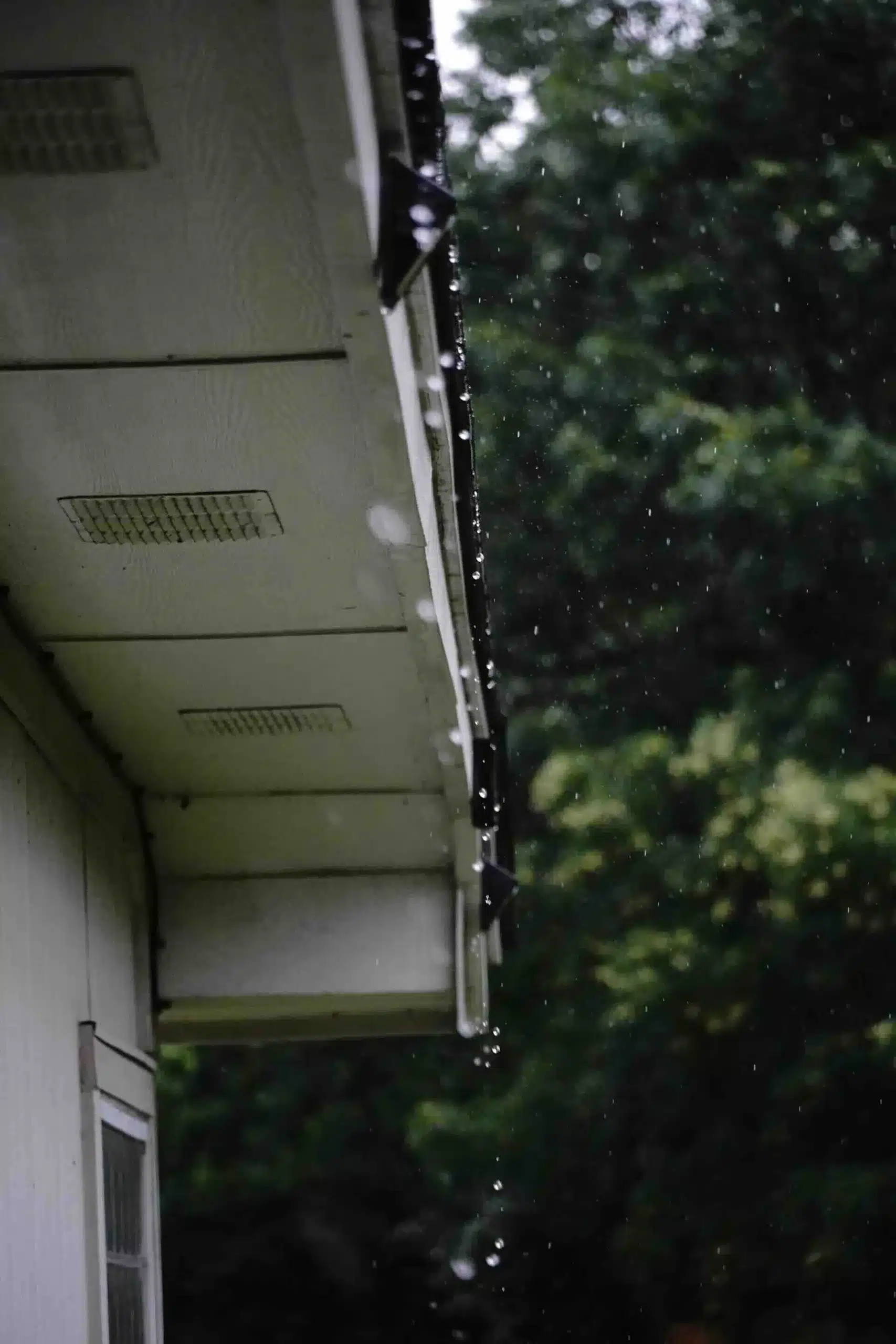
Some leak-detection tasks belong to you as a homeowner; they’re safe, useful, and only cost you time. Other tasks require getting onto the roof itself, and those should be left to a licensed professional with training and fall protection because the same Keys conditions that wreck roofs (such as wet tile, brittle shingles, hidden soft spots) also send untrained people to the emergency room.
The two lists below sort the work into what’s safe from the ground and what calls for a licensed roofer.
The following tasks are reasonable to handle yourself:
- Walking the perimeter with binoculars after a storm
- Checking the attic for daylight, water stains, and damp insulation
- Cleaning gutters and clearing debris from valleys (using a stable ladder)
- Photographing visible exterior damage for your records
- Watching for ceiling stains and tracking whether they grow
It’s time to call a licensed roofer for the following tasks:
- Anything requiring you to be on the roof itself, especially with tile, metal, or pitches over 4:12
- Any active drip during rain
- Any sagging, soft spots, or visible decking damage
- Tile slippage or fracture
- Suspected mold growth larger than a square foot
- Anything you plan to file an insurance claim on
The Occupational Safety and Health Administration (OSHA) reports that falls remain the leading cause of construction-related fatalities, and second-story Florida Keys homes with steep pitches are exactly where homeowners would probably get hurt.
Florida law also requires roofing work above a certain dollar threshold to be performed by a contractor licensed by the Florida Department of Business and Professional Regulation (DBPR). Insurance claims tied to unlicensed work are routinely denied.
What a Professional Roof Leak Detection Service in the Florida Keys Includes
Not every “free inspection” is the same. A thorough roof leak detection service in the Florida Keys should deliver:
- Full exterior walk of the roof system including hips, ridges, valleys, and all penetrations
- Attic interior inspection where accessible
- Photo documentation of every finding, with location notes
- Moisture meter readings on suspect areas
- Infrared thermal imaging when warranted
- Written report describing condition, cause, and recommended scope
- Separate, transparent estimate, with line items rather than a lump sum
- Verification of contractor license and insurance including workers’ compensation
If a roofer skips the documentation or pressures you to sign before you’ve read the report, treat it as a red flag.
The math on paying for detection works in the homeowner’s favor. A professional detection service in the Keys typically runs $200 to $500. Catching a failing pipe boot or lifted flashing at that stage means a $300 to $800 repair. Missing it and discovering the damage when water finally drips through the ceiling means $3,000 to $15,000+ for repairs that now include drywall, insulation, framing, and possible mold remediation.
The asymmetry’s the point: small upfront cost, large potential downside avoided. For roofs under five years old that haven’t seen a major storm, an inspection every 2 to 3 years is reasonable. For roofs older than 10 or any roof poststorm, annual’s the right cadence.
Roof Leak Repair Costs to Expect in the Florida Keys
Costs vary by roof type, access, and severity, but national benchmarks place minor leak repairs between $400 and $1,500 and major repairs involving decking, underlayment, or structural work between $1,500 and $7,000+.
Florida Keys-specific factors that push costs higher include:
- Barge or ferry access on more remote parts of the Keys
- Tile and metal premiums over asphalt shingle
- Permitting through Monroe County and the Florida Building Code’s HVHZ standards
- Limited local labor pool during peak hurricane recovery
Cheap repairs aren’t a bargain when they fail in the next storm. The cheapest legitimate repair done correctly will outperform a discounted patch every time.
Repair vs. Full Replacement: When Each Makes Sense
Most Keys leaks come from localized failures like a single piece of flashing, one cracked tile, or a deteriorated pipe boot that can get repaired in hours, not days. The Florida Building Code generally allows partial repair when the damaged area is less than 25 percent of the total roof surface within any 12-month period. Once damage exceeds that threshold, code typically requires a full replacement to bring the entire system up to current standards.
Other triggers for full replacement are widespread underlayment failure, rotted decking across multiple sections, a roof past the end of its serviceable life, or an insurance claim for which the carrier determines that repair would be uneconomical relative to replacement. A reputable contractor will tell you when repair is the right answer even if replacement would generate a bigger invoice. If every contractor you call recommends full replacement on a roof that seems repairable, get a fourth opinion from someone with no replacement quota to hit.
Insurance, Documentation, and Storm Claims
Florida’s insurance environment has tightened sharply, and nowhere more than in the Florida Keys. Three practical points matter most.
- Document everything before there’s a problem. Take dated photos of your roof every spring. That way, if a storm hits, you’ve already established the prestorm baseline that strengthens any future claim.
- Know what your policy covers. Most Florida homeowners policies distinguish between sudden, accidental damage from a covered peril (such as a hurricane, hail, or a fallen tree limb) and gradual deterioration from age, lack of maintenance, or preexisting conditions.
The first is typically covered. The second usually isn’t. Where it gets complicated: an old roof that fails during a storm may be denied if the adjuster decides the storm just exposed wear that was already there. But if you have prestorm photos, a recent inspection report showing that the roof was in good condition, and a professional damage assessment after the storm it will tip these decisions in your favor.
Florida policies also commonly include a roof depreciation schedule, meaning that older roofs may receive actual cash value rather than full replacement cost. Read your policy’s Section I-A coverage and any roof endorsement before assuming that you’re covered for the full repair amount. The Florida Department of Financial Services maintains consumer resources that explain claim rights, deadlines, and dispute options. - Watch out for Assignment of Benefits (AOB) agreements. If a roofer offers to “handle the claim for you” in exchange for signing an AOB, be careful. Florida AOB reform laws have changed what’s enforceable, and you may inadvertently give up rights you didn’t intend to.
Reference Sources:
- Federal Alliance for Safe Homes (FLASH): How to Prepare Your Home for a Hurricane
- Federal Emergency Management Agency (FEMA): Get Assistance After a Disaster
- Florida Department of Business and Professional Regulation (DBPR): Verify a Licensee
- Florida Department of Financial Services: Consumer Services
- Monroe County Florida: Contractor Information, Forms, & Applications
- National Oceanic and Atmospheric Administration (NOAA): National Hurricane Center
- Operation Blue Roof
- U.S. Centers for Disease Control and Prevention (CDC): Mold, Testing, and Remediation
Frequently Asked Questions (FAQ) about Roof Leak Detection in the Florida Keys
The following questions come up regularly from Florida Keys homeowners worried about what to do in case their roofs leak.
How do I find a roof leak myself?
Start inside, then work outside. Locate the interior stain or drip, climb into the attic above it with a flashlight to trace water marks back uphill along the rafters, then inspect the exterior directly above that point for damaged shingles, cracked flashing, or failed sealant. The 5-step method we recommend is detailed above.
How fast should I act when I see a ceiling stain?
Within days, not weeks. Mold can establish in 24-48 hours under Florida Keys humidity, and the hidden damage above the ceiling is usually worse than what you can see. Photograph it, check the attic above, and schedule an inspection that week.
Can I tarp my own roof after a storm?
Yes, for small damage you can reach safely from a stable position. For larger damage after a federally declared disaster, FEMA’s free Operation Blue Roof program may handle it for qualifying primary residences in Monroe County.
Will insurance cover a leak from an old roof?
It depends on the cause, not the age. Storm damage on a documented, well-maintained roof is typically covered; gradual wear and tear isn’t. Prestorm photos and recent inspection reports are what tip ambiguous claims in your favor.
How long should a roof last in the Florida Keys?
Asphalt shingle roofs last 12 to 18 years, concrete tile roofs hold up for 25 to 40 years, clay tile roofs can reach 50+ years, and standing-seam metal roofs last 30 to 50 years. Salt, UV, and storm exposure all shorten these ranges vs. mainland averages.
Is roof leak detection worth paying for if I don’t see active dripping?
For roofs over 10 years old or any roof that’s been through a named storm, yes. A $200-500 inspection that catches early failure beats a $3,000-15,000 repair after water reaches the ceiling.
Do you need to replace the whole roof when there’s a leak?
Usually not. Florida code allows partial repair when damage is under 25% of the roof. Full replacement is only required when damage exceeds that threshold or the underlying system has failed broadly.
Need Florida Keys Roof Leak Detection?
Roof leak detection in the Florida Keys is part vigilance, part calendar discipline, part knowing when to hand it to someone with a ladder and a thermal camera. The homeowners who avoid major damage in Islamorada, Key Largo, Marathon, and Key West inspect twice a year, document what they find, and act fast when something looks off.
The pattern that separates expensive surprises from manageable maintenance is simple: a baseline inspection now, photo documentation each spring, a poststorm walkthrough after every named system, and a relationship with a licensed Florida Keys roofer who knows your roof before there’s even a problem to solve.
Every season you wait, salt corrodes another fastener, sealants harden one degree closer to failing, and the next named storm gets closer to making the decision for you. Lindholm Exteriors has been protecting Florida Keys homes since 1949, and that experience has earned us an A+ rating from the Better Business Bureau (BBB) and the trust of generations of Keys homeowners.
Request a free roof leak detection inspection today and walk into hurricane season knowing exactly what’s over your head.