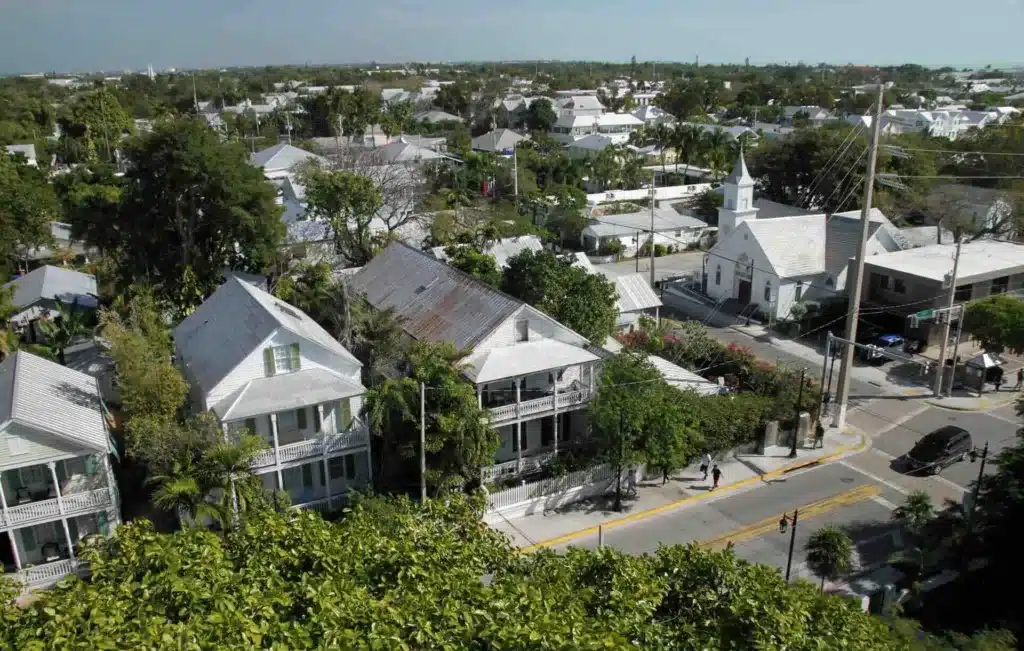

If you think replacing a roof in the Florida Keys works the same as it does in Orlando or Tampa, think again. Roof replacement in the Florida Keys isn’t like anywhere else in Florida.
The Florida Keys are a unique environment for homeowners. Saltwater air, hurricane-force winds, intense UV radiation, and the logistical reality of living on a chain of islands all combine to push roofing costs higher than what you’d find on the mainland. Materials need to be tougher. Contractors need to be more experienced. And permitting needs to be tighter.
Average Roof Replacement Cost in the Florida Keys: What to Expect
Getting a baseline number is the first step in planning your project.
The roof replacement cost in the Florida Keys varies widely based on home size, roofing material, roof pitch, and the specific location of your property. Here are realistic average cost ranges homeowners can expect.
General Cost Ranges by Material
The following ballpark figures are for a full roof replacement on a typical single-family home in the Florida Keys.
- Asphalt shingles: $8,000-18,000
- Metal roofing (standing seam or corrugated): $15,000-40,000+
- Concrete or clay tile: $18,000-35,000+
- Flat/TPO roofing: $7,000-20,000
- Metal shingles: $14,000-28,000
These ranges reflect installed costs, meaning materials plus labor. They don’t account for any tear-off or structural repair work that might be needed before installation begins, which can add thousands more.
What the Median Home Looks Like
A typical single-story home in the Keys might have a roof surface area (called “square footage”) of 1,500 to 2,200 square feet. Roofing contractors price by the “square,” which equals 100 square feet of roof surface. A 2,000-square-foot roof would be 20 squares.
At a midrange metal roofing price of around $900-1,200 per square installed, that 20-square roof would cost approximately $18,000-24,000.
Material-Specific Pricing: Breaking Down Your Options
Your choice of roofing material is one of the biggest drivers of your total roof cost in the Florida Keys. Here’s a closer look at what each material will run you and why.
Asphalt Shingles: Most Popular Choice
Asphalt shingles are the most widely used roofing material in the United States, and they’re still available in the Keys, but they may not work out best for coastal exposure. The typical cost for a roof with asphalt shingles in the Florida Keys is $7-20+ per square foot installed (about $15,000-40,000+ for most homes).
They’re affordable, widely available, and easy to install. However, standard 3-tab shingles may not meet Florida’s strict wind-resistance requirements in certain areas. If you go with asphalt, look for architectural or impact-resistant shingles rated for high-wind zones. These products cost more but hold up better in a coastal environment.
For homeowners in Key Largo or other upper Keys locations with slightly more access to mainland supply chains, asphalt can be a practical option on a tighter budget. However, expect to replace them sooner than you would in a less demanding climate.
Metal Roofing: Long-Term Investment
Metal roofing is a great option in the Florida Keys, and for good reason. The typical cost for a metal roof in the Florida Keys is $7-20+ per square foot installed (about $15,000-40,000+ for most homes).
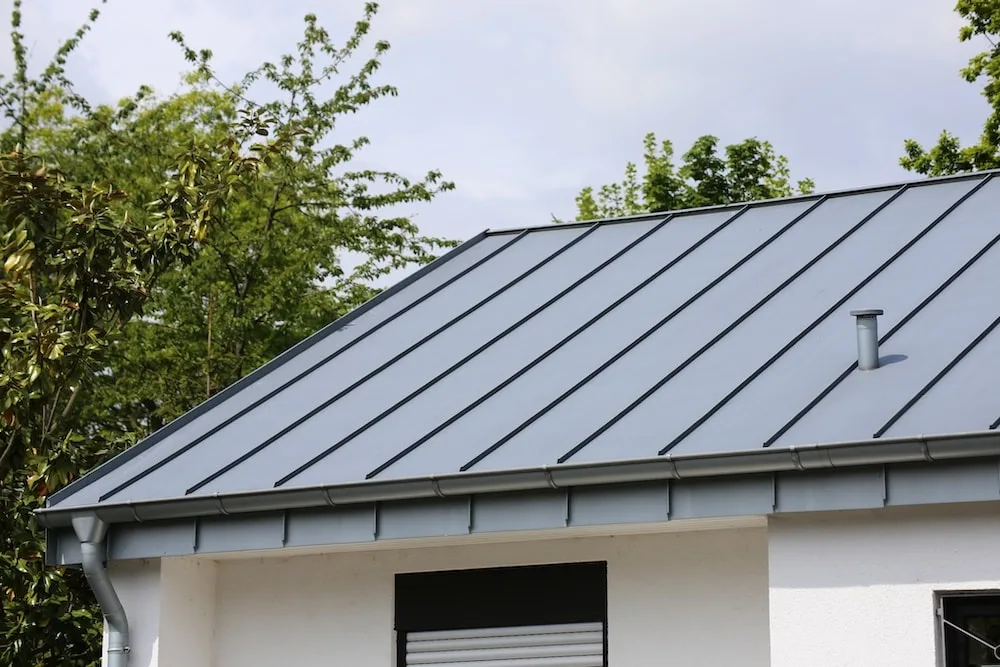
Standing seam metal is especially popular because it performs exceptionally well in high-humidity, high-wind, and salt-air environments. It reflects heat, reducing your cooling bills, and can last 40-70 years when properly installed and maintained.
Metal roof cost in the Florida Keys is higher than the national average, partly because of local building code requirements and partly because of the logistical costs of getting materials to island locations. In Key West, for example, material delivery to certain properties can add cost depending on access and logistics.
There are different types of metal to consider as well such as:
- Aluminum is favored in salt-air environments because it doesn’t rust.
- Galvalume, a zinc-aluminum alloy coating, is another option.
- Painted or Kynar-coated finishes help to resist chalking and fading in the intense Florida sun.
Concrete and Clay Tile: Florida’s Signature Look
Tile roofing is a classic choice in South Florida and fits the architectural character of many Keys homes. The typical cost for a roof with concrete and clay tile in the Florida Keys is $8-20 per square foot installed (roughly $18,000-35,000+ for most homes).
Both concrete and clay tiles are heavy, which means that your home’s structural framing needs to be assessed before installation. This adds an inspection and potential reinforcement cost on top of materials and labor. Tile roofs, however, can last 50+ years and perform well in hot, humid climates.
They’re not the fastest to install and aren’t ideal for very low-slope roofs, but, for the right home, they offer excellent durability and a classic look that suits the Keys aesthetic well.
Flat and Low-Slope Roofing Systems
Many homes and commercial buildings in the Keys have flat or low-slope roofs, which require different materials entirely. The typical cost for a flat and low-slope roof in the Florida Keys is $4-9 per square foot installed (about $7,000-20,000 for most homes).
Thermoplastic polyolefin (TPO) membranes and modified bitumen systems are common for flat roof applications. They’re heat-welded or adhered to create a watertight membrane. In a climate with as much rain as the Keys sees, proper drainage design is critical. A flat roof that’s not properly sloped or drained is a recipe for leaks.
In Marathon and other midKeys areas where concrete block structure (CBS) homes are common, flat roofing systems are frequently used and are a practical, cost-effective solution when properly installed
How Roof Size and Pitch Affect Your Roof Cost
Two of the most direct factors in your final quote are how big your roof is and how steep it is.
Roof Size: More Than the Just Square Footage of Your Home
More square footage means more materials and more time to install them, but it’s worth noting that the “roof area” isn’t the same as your home’s floor area.
An 1,800-square-foot home can easily have a roof area of 2,200-2,500 square feet or more, depending on overhangs, dormers, and roof shape. Your contractor will calculate the actual roof area and price accordingly.
Roof Pitch and Complexity
Pitch refers to how steep your roof is, measured as the rise per foot of horizontal run. A 4/12 pitch (four inches of rise per 12 inches of run) is considered moderate. Anything above 6/12 is steep.
Steep pitches require additional safety equipment, slower installation, and more labor time. That alone can add 10-25% to your labor costs. Roofs with multiple valleys, hips, dormers, skylights, or other architectural features also take longer to install properly and create more waste in cut materials.
Here’s how pitch typically affects pricing:
- Low pitch (2/12 to 4/12): Standard labor rates apply.
- Moderate pitch (4/12 to 6/12): May add 10-15% to labor costs
- Steep pitch (6/12 and above): Can add 20-30% or more to labor costs
Labor Costs in the Florida Keys: What Drives Them Up
Labor is often where homeowners are most surprised by the cost, especially if they’ve gotten quotes on the mainland. Labor is typically 40% to 60% of your total roof replacement cost so understanding what drives those costs can help you to evaluate quotes more accurately.
Roofing labor in the Florida Keys typically runs $3-7 per square foot on top of material costs. Several factors drive this cost higher than the Florida state average.
- Permitting requirements—Monroe County and incorporated areas like Key West have more stringent permitting rules than most of Florida. Inspections take time, and contractors need to be familiar with local code requirements, including Florida Building Code wind-load standards, which are among the strictest in the country.
- Material delivery costs—Supplies coming down U.S. Highway 1 from South Miami or the Homestead area travel significant distances over bridges and causeways. Fuel, time, and logistics all get baked into your quote.
- Workforce availability—The Keys have a smaller pool of licensed roofing contractors than Miami-Dade or Broward counties. Experienced, licensed roofers know their value, and in a market with strong demand (especially after storm seasons), that can mean higher rates.
- Contractor insurance requirements—This is a must. Before signing any contract, verify that your roofing contractor holds a valid state contractor’s license and carries both general liability insurance and workers’ compensation coverage. This protects you from being held liable if a worker is injured on your property. Any reputable contractor will provide proof of insurance without hesitation.
Florida Building Code and Wind-Load Requirements
Living in one of the most hurricane-prone regions in the U.S. means that your roof must meet a very high standard.
Florida’s Building Code sets minimum wind-speed resistance requirements for roofing systems. In the Florida Keys, homes are typically in high-velocity hurricane zones (HVHZ, or High Velocity Hurricane Zone), which means materials and installation methods must meet more demanding standards than elsewhere in the state.
What this means for your wallet is that not all roofing products available at a national home improvement store are approved for use in Monroe County. Contractors must use code-approved systems, which sometimes cost more but offer dramatically better protection.
The Florida Department of Business and Professional Regulation (DBPR) provides licensing information for contractors, and the Florida Building Commission oversees building code standards. These standards exist because the building performance data after past hurricanes showed clearly that properly installed, code-compliant roofs survive significantly better than those that aren’t.
Location-Specific Factors: Key West, Key Largo, Islamorada, and Marathon
The Florida Keys stretch roughly 120 miles, and where you live within that stretch matters when it comes to pricing.
Key West
At the southwestern tip of the Keys, Key West is the most densely developed area. Roofing work here involves navigating tight streets, older historic homes, many in the Key West Historic District, and sometimes significant permitting complexity for renovation or replacement work on older structures.
Historic district requirements can add review time and restrict material choices, which can affect both timeline and cost. Expect roofing quotes in Key West to be on the higher end of the spectrum for these reasons.
Key Largo
The northernmost and largest of the Keys islands, Key Largo has the most direct access to mainland Florida supply chains. For homeowners here, material transportation costs are somewhat lower than in the lower Keys, which can help to bring overall project costs down slightly.
However, keep in mind that labor rates are still elevated compared to the mainland, and Monroe County permit requirements apply throughout.
Islamorada
Part of the Upper Keys, Islamorada is known for luxury homes and waterfront estates. Larger, higher-end homes here often involve more complex roofing systems, premium materials, and higher total project budgets.
Homeowners in Islamorada should budget for premium materials and professional installation. Many choose metal roofing or tile for its longevity and aesthetic value on high-value properties.
Marathon
In the middle Keys, Marathon serves as a hub community for our area. It has a mix of residential property types including a significant number of concrete block homes with flat or low-slope roof systems.
Flat roof replacements and TPO membrane systems are common in Marathon, and local contractors are generally well-versed in these systems. Project costs here tend to be closer to the midrange of Keys pricing.
Cost Examples: Real-World Scenarios
Sometimes it helps to see how all these factors come together in a real project scenario. Here are a few examples based on typical Florida Keys homes.
Your actual cost will depend on your home’s specifics, local contractor pricing, current material costs, and other site conditions
Example 1: Asphalt Shingle Roof in Key Largo, 1,800-Square-Foot Home
This example represents a budget-conscious homeowner in the upper Keys looking for a practical, code-compliant solution. Impact-resistant architectural shingles offer better wind performance than standard three-tab products while keeping costs manageable.
- Roof area: approximately 2,100 sq. ft. (21 squares)
- Material: impact-resistant architectural shingles
- Pitch: 4/12 (moderate)
- Estimated cost: $11,000-15,000
Example 2: Standing Seam Metal Roof in Islamorada, 2,400 sq. ft. Home
This scenario reflects a larger waterfront property in the midUpper Keys where durability, aesthetics, and long-term performance are top priorities. A Kynar-coated aluminum standing seam system delivers excellent salt-air resistance and a clean, modern look suited to a higher-value home.
- Roof area: approximately 2,900 sq. ft. (29 squares)
- Material: aluminum standing seam, Kynar finish
- Pitch: 4/12 with hip roof design
- Estimated cost: $26,000-36,000
Example 3: Flat TPO Roof in Marathon, 1,500-Square-Foot Concrete Block Home
Flat roof replacements are common in Marathon, where concrete block construction is widespread. A fully adhered TPO membrane system is a practical, watertight solution for low-slope applications and performs well in the Keys’ heavy rainfall environment.
- Roof area: approximately 1,600 sq. ft.
- Material: 60-mil TPO membrane, fully adhered system
- Pitch: flat (1/12)
- Estimated cost: $9,000-14,000
Example 4: Clay Tile Replacement Roof in Key West Historic Area, 1,600-Square-Foot Home
Replacing a tile roof in Key West’s historic district adds layers of complexity that aren’t present elsewhere in the Keys. Historic district review requirements, structural assessment needs, and the premium cost of clay tile all contribute to a higher total project budget.
- Roof area: approximately 1,900 sq. ft. (19 squares)
- Material: clay tile (requires structural assessment)
- Pitch: 5/12
- Historic district review required
- Estimated cost: $22,000-32,000
Choosing the Right Roofing Material for the Keys Climate
Not every roofing material performs equally well in a coastal, tropical environment. Here’s a quick breakdown to help guide your decision.
In the Florida Keys, your roof faces:
- Hurricane-force winds that can exceed 150 miles per hour in major storms
- Saltwater air that accelerates corrosion on metal products not rated for coastal use
- Intense UV radiation year-round that degrades certain materials faster than in northern climates
- Heavy rainfall concentrated in a long wet season that stresses drainage systems
- High humidity that contributes to mold growth under improperly ventilated roofing systems
Given these conditions, the materials that tend to perform best in the Keys are aluminum or Galvalume metal roofing, clay or concrete tile (on structurally appropriate homes), and impact-rated architectural shingles (as a budget-conscious option). Standard 3-tab asphalt shingles are generally not recommended for long-term durability in this environment.
How to Get the Most Accurate Quote for Your Roof
Walking a contractor through your roof in person is the only way to get a truly accurate estimate.
Photos and square footage estimates can give a rough idea, but a proper quote requires a physical inspection. Here’s how to prepare for a roofing estimate:
- Know your home’s approximate square footage and roof style (hip, gable, flat, etc.)
- Have records of your current roofing material and any recent repairs
- Note any areas where you’ve seen leaks, staining, or visible damage
- Ask about the condition of your roof deck (the structural sheathing under the roofing material), as damaged decking is common in older Keys homes and adds to total cost
- Ask whether the contractor will remove and dispose of existing roofing or install over it (in most cases, a full tear-off is recommended)
Getting three quotes from three separate licensed contractors is standard practice. Comparing them side by side, including materials, scope of work, and warranty terms, gives you a solid basis for making a confident decision.
Florida Building Codes and Wind Ratings: Why They Drive Cost
Florida has some of the most stringent residential building codes in the country, and roofing is a major focus of those standards. The Florida Building Code (FBC) was significantly strengthened following Hurricane Andrew in 1992 and has continued to evolve with each major storm event.
In high-velocity hurricane zones (HVHZs), especially in South Florida, requirements are even more demanding.
This means that:
- Roofing products must carry a Florida Product Approval (FPA) listing to be used legally in the state.
- Underlayment requirements are more demanding than in most other states.
- Fastening schedules for shingles are stricter, requiring more nails per shingle.
- Inspections during the roofing process are mandatory.
All of this adds to the cost of Florida roof replacements compared to other states.
Questions to Ask Before Hiring a Roofing Contractor
Getting the right contractor is just as important as choosing the right material. Roof cost in Florida varies from contractor to contractor, and a lower number doesn’t always mean better value.
Here’s what to ask before signing any contracts:
- Are you licensed in Florida and Monroe County?
Ask for the license number and verify it at the Florida Department of Business and Professional Regulation (DBPR) website - Can you provide proof of insurance?
General liability and workers’ compensation are both required. Make sure the coverage amounts are substantial. Coverage minimums that are too low won’t protect you adequately. - Will you pull the permits?
Reputable contractors pull permits. If they suggest skipping permits to save money, walk away. - What does your warranty cover?
Ask separately about manufacturer warranties (on materials) and workmanship warranties (on installation). - Do you have experience with Florida Building Code HVHZ requirements?
Not all contractors are trained for this. - What roofing systems are you certified to install?
Many manufacturers require contractor certification for warranty purposes. - How do you handle unexpected issues like decking damage?
Get a written change order policy before work begins - Who will actually be doing the work?
Some contractors subcontract their labor. That’s not inherently bad, but you should know who will be on your roof and whether those workers are covered under the contractor’s insurance.
Sources of information:
- Angi: How Much Does Roof Replacement Cost? [2026 Data]
- Consumer Reports: Roofing Buying Guide
- Fixr: How Much Does a Roof Replacement Cost? [2026 Data]
- Florida Department of Business and Professional Regulation: Contractor Lookup
- Forbes: How Much Does Roof Replacement Cost?
- HomeAdvisor: How Much Does Roof Replacement Cost in 2025?
- U.S. Department of Energy: Cool Roofs
Frequently Asked Questions
Here are the questions that homeowners ask most often when exploring roof replacement cost in the Florida Keys.
How much does a new roof cost in the Florida Keys on average?
Most homeowners in the Florida Keys spend between $10,000 and $35,000 for a full roof replacement, depending on the size of the home, the material chosen, and the complexity of the job. Metal roofs tend to run $15,000-40,000+ while asphalt shingles can be done for $8,000-18,000 on a typical home.
Is metal roofing worth the higher upfront cost in the Keys?
For most homeowners in the Florida Keys, yes. Metal roofing carries a higher upfront price tag but lasts significantly longer than asphalt (40-70 years vs. 15-25 years), performs better in high-wind events, and can reduce cooling costs thanks to its reflective properties. When you factor in the reduced frequency of replacement, the lifetime cost often comes out ahead.
Can I put new shingles over my existing roof?
In some cases, yes, but it’s generally not recommended, especially in the Florida Keys. Florida Building Code limits the number of roofing layers allowed, and installing over damaged or deteriorating decking hides potential structural issues. A full tear-off and inspection is almost always the better choice for long-term performance.
Why does roofing cost more in the Keys than in Miami?
Several factors contribute to higher roof costs in the Keys compared to the Miami metro area. These include the cost of transporting materials over a long, one-road route (U.S. Highway 1), a smaller and more specialized local contractor workforce, more stringent permitting and inspection requirements, and the higher performance standards required for coastal and wind-zone construction.
How long does a roof replacement typically take in the Florida Keys?
A standard residential roof replacement generally takes 1-3 days for an experienced crew, weather permitting. However, permitting timelines, inspection scheduling, and material delivery can extend the total project timeline. In busy post-storm seasons, contractor availability can add further delays. Planning ahead and not waiting until your roof is failing is strongly advised.
What roofing materials are best for the Florida Keys climate?
Aluminum standing seam metal, Galvalume metal roofing, clay tile (on homes with adequate structural support), and impact-rated architectural shingles are generally considered the best options for the Keys climate. They offer varying combinations of wind resistance, salt-air durability, heat reflectivity, and longevity suited to the unique demands of island living.
Do roofing contractors in the Florida Keys need to be insured?
Yes, absolutely. Any licensed roofing contractor working in Florida is required to carry general liability insurance and workers’ compensation insurance. Always request proof of insurance before any work begins on your property. Hiring an uninsured contractor exposes you to significant financial and legal risk.
What’s the difference between roofing in Key West vs. Key Largo?
Key West, especially the historic district, may have additional review and approval requirements for roofing work that can slow the process and restrict material choices. Key Largo, as the northernmost island, has somewhat easier access to mainland materials and supply chains. Both locations are subject to Monroe County permitting and Florida Building Code requirements, but project logistics and costs can vary meaningfully between the two areas.
Ready to Move Forward?
Replacing your roof in the Florida Keys is one of the most significant investments you’ll make as a homeowner. It protects everything inside your home from the elements, adds value to your property, and gives you peace of mind when the next storm season rolls around.
Understanding the costs, materials, and local factors involved is the first step toward making a confident, well-informed decision. Whether you’re dealing with historic district considerations in Key West, planning a high-value home upgrade in Islamorada, or budgeting for a flat roof replacement in Marathon, the information in this guide is designed to help you go into the conversation with contractors knowing what to expect.
If you’re ready to get a professional assessment and an honest, no-pressure quote for your roof replacement or other exterior improvements, the team at Lindholm Exteriors is here to help. With experience serving homeowners throughout the Florida Keys, commitment to quality craftsmanship, and deep familiarity with Florida Building Code requirements, Lindholm Exteriors brings the expertise your home deserves.
Contact us today to schedule your consultation, and let’s meet to discuss your specific needs, explore material options, and create a customized plan that fits your budget and timeline.